
Once upon a time, there was a village, and they knew one magic word. But one day it happened that the word was lost…
High in the mountains there lived a village with wonderful and cheerful people. Brave men hunted in the forests and fished in the lakes around, while beautiful women filled their homes with coziness, sang songs and planted flowers in their gardens.
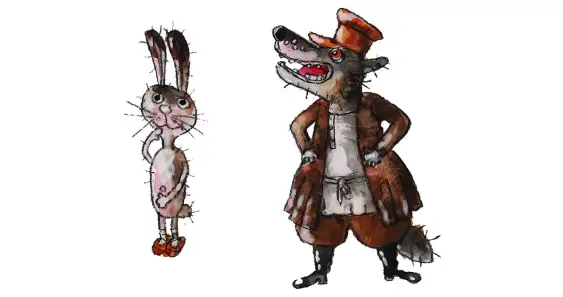
One day a strange guest appeared in the village wearing a richly decorated coat and a hat pulled down over his eyes. There was something sinister about his appearance. However, the elders welcomed him warmly. The entire village came to the feast in honor of the guest. The elders asked the guest: what brought him to them? The stranger smirked.
I have come to make a profitable deal.
The guest clapped his hands: suddenly a chest appeared before him and opened by itself. The guest announced that each villager could take one item from it. Women and children rushed to the chest and simply gasped: what wasn't there! Jewels, ornaments, toys of pure gold. The men couldn't take their eyes off the eastern sabers and silver daggers. No matter how rich the forests and lakes around the village were, such gifts could not be found in them! The amazed elders asked the guest what he wanted in exchange for this wealth.
Oh, a trifle! In return, I will take from you just one word. I will clap my hands—and you will forget about it forever. But what is one word! Just look at how the stones on this dagger shimmer!
The offer seemed perfect. Everyone agreed—and the stranger clapped his hands.
Immediately everything around was shrouded in smoke, and when the smoke cleared, he was gone. However, the chest remained—the guests immediately rushed to divide the gifts. It turned out that there wasn't enough gold and jewels for everyone.
Little by little, lively conversations turned into arguments; insults and shouts followed—it would have come to bloodshed if not for the intervention of the elders. Everyone's mood was spoiled. Guests left the house in silence.
From that day on, the villagers seemed to have been replaced. Men became nervous and gloomy. Women—angry and quarrelsome. Best friends quarreled forever, lovers—parted ways.
Songs and jokes fell silent, giving way to constant bickering. No longer did songs sound over the village, no longer did guests flow in a lively stream from other countries. Young people left the village, hoping that far from their native lands the curse of the uninvited guest would dissipate.
It seemed that the stranger had taken from the people not one word, but all their happiness and all their life.
The desperate elders announced a bag of gold as a reward to whoever would return the cherished word to the people. Now daredevils, sages and adventurers gathered in the house of the elders and spent days going through options.
Maybe happiness? Or health? Or harmony?
But none of the options—from the simplest to the most exotic—could lift the invisible curse.
One day a little boy appeared in the house of the elders, the son of local peasants. He was a quiet and thoughtful child—instead of playing with other children, he preferred to spend time with books. The boy announced that he could find the answer to the riddle in ancient books left by the ancestors of the villagers, and asked to be let into the library. The men laughed, the elders shook their heads—but they had nothing to lose, and the boy was allowed to try.
For three days no one saw him—the peasant's son studied old books, not coming down for food or drink. On the fourth day he came to the Elders and announced that he had found the solution. By the strange gleam in the boy's eyes, the wisest men understood: he was not joking, and they themselves were filled with hope. Surrounding the youth, the Elders demanded that he tell them the cherished word.
The boy shook his head and asked to be given some food first: after three days in the library he had grown quite weak from hunger. One of the Elders had some food: bread and a little cheese. Taking the plate from his hands, the boy said
Thank you, grandfather!
And suddenly a miracle happened. On the gloomy face of the old man, worn out by sleeplessness, a smile appeared for the first time in many days. He raised his eyes to the others and then everyone understood: the magic word had been found! The word "thank you"—that's what the stranger had taken from the people. Along with the ability to give thanks and receive gratitude. To give love and feel needed. The eyes of all the elders were fixed on the peasant's son, whose name they didn't even know.
Thank you, young hero! Your gift is more precious than any gold.
From that time on, joy, peace and harmony returned to the village. The air was again filled with songs and the scent of flowers, and trade caravans began to arrive again from distant lands. The guards at the gates anxiously looked into the distance every morning: would the uninvited guest appear again? But he, as if sensing that the reception would not be warm, never showed his face.
And what about our boy? He received his reward—a bag of gold—and gave it to his parents. They were able to expand their modest farm, buy livestock and hire helpers, but continued to work just as hard. Their prosperity only multiplied—and soon the family became one of the most respected in the village. The young hero grew up and matured, but did not lose his love for books: now he was to enter university. The long journey did not frighten him at all: after all, the boy had with him the power of the magic word. The word that opens all doors in the world!