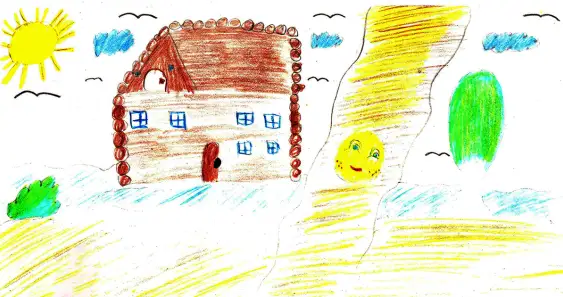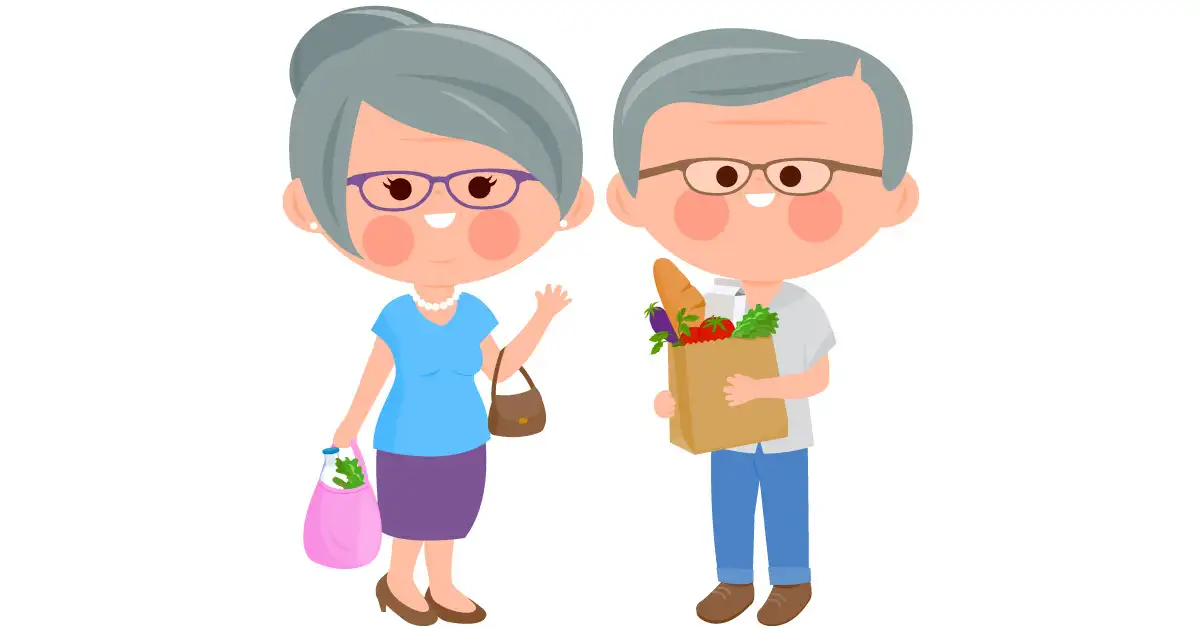


In a small village there lived an old man and an old woman. And because the village was so very small, no one else lived there besides them. The old man went fishing every day—there was a sea nearby—whilst the old woman grew vegetables in the garden and prepared various delicious dishes for the old man.
The old man and old woman also kept hens, which laid eggs for them every day. The old woman loved her hens very much. She asked the old man to build them a lovely henhouse, and in the cold months she laid down straw for them so they wouldn't be chilly.
The old woman and the old man lived in perfect harmony; they loved each other dearly and always looked after one another. They did everything together—weeding the vegetable beds, cleaning out the henhouse, and tidying the house. The old man called the old woman Kindness, because she truly was very kind, caring, and generous. When a family in the neighbouring village had no money at all, the old woman would walk to their home and bring treats for the children, even though the neighbouring village was very far away—more than three hours at a steady pace.
And so one fine evening, when it was time to go to the shed to collect the eggs, the old man heard the old woman cry out:
Old man, old man, come here quickly! There's something in the shed!!!
The old man was frightened. What could it be? Perhaps a fox had got into the shed and eaten all the hens!
Leaping from his chair, the old man rushed to the old woman in the shed. Upon entering, he couldn't believe his eyes. In a cosy corner, on golden straw, lay an egg—but not an ordinary one. It was made of gold.
Can such a thing be? Can hens lay eggs of pure gold? Well, I never! Where did you get this egg?
The old man exclaimed with a questioning look.
Where, where—the hen laid it! I've only just come in, and here it is! Old man, does this mean we're the richest people in the whole world?
The old woman cried, still not believing her eyes.
Well, I don't know, but this egg will be enough for us to live well and never have to work in the garden again. Actually, I think we should hide it away somewhere safe, just in case. You never know what might happen.
The old man rejoiced.
And so they did. They made a small box from bits of wood, the old man fitted a sturdy lock, and they placed the golden egg inside. Then they went to bed.
Morning came, and the old man rose early as usual to go fishing. Taking his rods and bait, he stepped outside and saw the old woman hammering enormous stakes into the ground.
What on earth are you doing, old woman? Why are you burying these great posts in the ground? The sun's only just rising, and you're already up to something.
I'm building a fence so that no one can come in and ask us for anything. There's no need to give things away to all and sundry. From now on I shan't give anyone anything ever again, and I shan't offer anyone any hospitality. And you, old man, don't you take anything from the fridge either. I shan't be feeding you any more.
The old woman muttered under her breath.
Have you gone completely mad? What are you doing? We've lived side by side for so many years! I'll go fishing now, catch some fish, and we'll cook it this evening and celebrate our golden egg.
No, old man. You go fishing, then bring me the fish, and I'll eat it myself.
The old man couldn't believe his ears. When he came home that evening with his catch, it all came to pass. The old woman took the fish and left the old man hungry. After the egg appeared, the old woman had gone mad—she'd become greedy and spiteful. Days passed like this, with the old man eating nothing at all whilst the old woman kept everything for herself.
And so the old man gathered all his belongings, tied them in a bundle, and set off wherever his eyes led him. He wandered through the forest, found berries to eat, and sometimes went fishing and cooked fish over a fire. The old man slept in a hut he'd built himself from branches and leaves.
A week passed. The old woman had amassed so many goods that they wouldn't all fit in the house. She did everything in the garden herself, cleaned the house herself, and even had to go fishing for tasty fish herself.
And then she thought:
On my own, I simply can't manage all this. And in the evenings it's boring and sad. I can't go into the forest by myself any more—it's frightening. What do I need this egg for? What am I to do with it? But my old man is wandering alone through the forest, eating nothing, freezing. Yet he always treated me well and helped me, looked after me.
The old woman grabbed her quilted jacket and set off to find the old man. She wandered through the forest, and suddenly she saw a light in the distance—someone had lit a fire. She drew closer and saw the old man sitting there, looking sorrowful.
Old man, my dear old man! At last I've found you! Come home. I've cooked so many delicious things. I'll warm you up and feed you. We'll live as we did before, helping each other and looking after one another.
But what about the golden egg? After it appeared, you became so greedy and spiteful.
The old man asked.
No, dear, I understand everything now. I don't need any wealth, any golden egg. I miss you so much. I'm so sad in the evenings. I want to talk with you and laugh. And I've no one to cook delicious meals for. Come home, my dear!
The old woman pleaded.
After a few days everything was put right. Laughter rang out in the house once more. The old man and old woman worked together in the vegetable beds, and the old woman even began going fishing with the old man.
Fairy tales are written so that people understand that happiness doesn't always lie in wealth. What matters most is having your loved ones close by—everything else is nonsense.