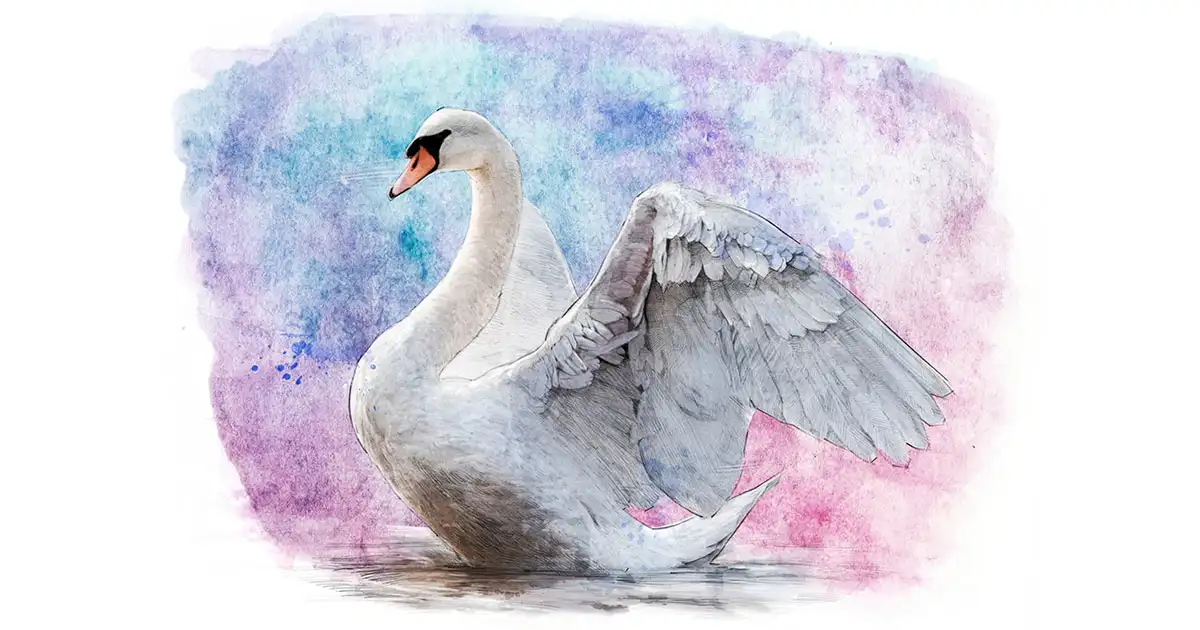

In a quiet park on the edge of a small town lived a young swan of remarkable beauty. Yet neither his flock nor the other birds saw anything noteworthy in him.
He did not hold his head high with pride, as was customary amongst swans. He could not sing like the nightingale by the pond. Indeed, he considered himself rather like a sparrow, because none of the people walking in the park paid him any attention. Meanwhile, the other swans were beloved; artists often painted them against the backdrop of summer sunrises and sunsets.
The young bird listened intently to every sound, counted the footsteps of people walking through the park, and watched the flight of his fellow swans pass by—as if searching for a kindred spirit. For being alone is terribly difficult.
The swan dreamed of a true friend, but no one stopped to talk with him. He did not understand why this was so, and he grieved deeply.
One early summer morning, a musician came to the pond with a flute and began to play his favourite melody. He was sad: he had recently arrived in town and was completely alone. The musician thought that someone, upon hearing the song, might want to become his friend.
At that moment, the swan swam to the shore. Noticing the bird, the man did not stop playing. And the chance observer listened intently, and it seemed to him that nothing more beautiful than this melody could exist in the world.
Having finished playing, the musician took a piece of bread from his bag and held it out to the swan.
Do not be afraid, I will not hurt you. Did you like the melody? It is wonderful. Take some bread. You must be hungry. How beautiful you are! Truly, I have never seen a more beautiful bird.
The swan felt that this was a good person and, stretching his neck, took the piece from his hands. After eating, he looked carefully at the musician, turned around and swam away.
Goodbye, my beautiful friend! I hope we shall meet again. I am to play in the orchestra here in this town. I shall visit here whilst the weather permits.
The swan thought long about the man's words—that he was beautiful. Looking at his reflection in the water's surface, for the first time he saw not the most beautiful of swans, perhaps, but certainly not a sparrow either. It seemed to him that there was something special about him, though he could not quite understand what it was.
Time passed, and autumn crept in unnoticed. The musician still came to play on the shore, and the swan came to the sound of the flute. The man and the bird became friends. It seemed that they understood each other as no one else in the entire world could.
But all things must come to an end. The musician, to be honest, had prepared himself for this: he knew that in autumn the swan would fly to warmer lands. This happened without fail, year after year. Beautiful birds are not made for winter's cold.
The coming separation filled the flautist's soul with sorrow more and more each day. And would his friend remember him when he returned from the warm lands in spring?
At last came the morning when the swans were to depart for the south. Our swan, as always, kept himself apart from the flock. The beautiful birds were about to take flight into the sky, when suddenly a rustling sound came from the bushes by the shore.
The bird thought it was his friend arriving early, but the musician's footsteps were smooth and quiet, quite unlike this rough tread. Hunters!
They were catching birds for sale, wounding them cruelly and separating them from their families. The swan cried out to his companions with all his might to flee, and rushed towards the hunters. His flock heard him and flew away from danger.
Our swan fought bravely with the hunters and barely escaped. With a wounded wing, he hid from prying eyes behind a tree by the pond. He was distressed, for he could no longer take flight, yet happy that he had saved those whom, despite everything, he considered friends.
At that moment, the musician came to the pond. Hearing his friend, the swan emerged from behind the tree. The flautist was glad to see the bird, but could not understand why he had not flown away with the others.
Is all well with you? What has happened?
The swan could not answer his friend, only looked at him sadly in the eyes.
The musician understood everything when he saw a red mark on the snow-white wing. He approached the water's edge and held out his hand to the swan. To his surprise, the bird swam over and pressed his head against his hand.
It is growing colder, the pond will soon freeze over. Frosts will come, the likes of which you have never known. You should not stay here. Come with me. We shall heal your wing. I will play the flute for you. And in spring you shall return here. Please, do not be afraid,—the musician said quietly.
The man understood that he could not force a proud, wild bird to follow him. And without help, the wounded swan would perish. The flautist grew sad, rose slowly and walked along the path towards his home.
Suddenly, leaves rustled behind him. Turning around, the musician saw the swan waddling after him. Both froze for a moment, and then the flautist took his friend in his arms, for the journey was a long one.
How glad I am that you trusted me! You will like my home, and in spring you shall return here again. You know, I saw the flock take flight. It turns out you saved them all. You are a true friend, and that is what sets you apart from the others. You are a special swan, the most beautiful of all… And here is my home, we have arrived.
The musician made a cosy corner for his guest, poured water and fed him porridge, and then tended to his wing. And so they lived together.
The flautist played beautiful melodies for the bird, and he recovered quickly. His friend's care was the best medicine. Moreover, now the swan knew for certain what made him unique: he knew how to be a friend and was willing to do anything for those he loved. Even if they did not wish to spend time with him and considered him uninteresting.
By spring, the bird had fully recovered. It grew warm, and flocks returned from the south one after another. One morning, the musician approached his friend and looked into his eyes.
You know, the weather outside is beautiful. The pond has already welcomed your friends, and I think you would like to see them too. Shall we not take a walk to the park?
The flautist opened the door and headed towards the path leading to the pond. The swan walked after him.
Seeing his flock, the bird joyfully rushed to the pond. But suddenly he turned and looked sadly at his friend. The musician understood everything once more.
Go to them, they must surely have missed you. You are more accustomed to being with them. You are a wonderful friend, and I hope you were happy in my home. Fly high, be happy, my beautiful swan, I shall not forget you. Perhaps I shall be fortunate enough to see you again, swimming towards me to the sound of the flute.
The swan lowered his neck in farewell and looked at the musician with a gaze full of gratitude for his help and friendship.
The musician too was grateful to the bird for the lesson in courage, sincerity and loyalty. Something important took root in his soul, filling each delicate fibre with special light and warmth.
The flock welcomed their brother with joyful cries. Each swan owed him their life. Each remembered how he, without sparing himself, had rushed to protect his family from the hunters. From that day on, our swan was never alone again.
And his faithful friend the musician still came to the pond. Only winter briefly prevented them from seeing one another.
A warm summer breeze told me this remarkable story. Whether to believe that what is written actually happened is for you alone to decide, dear reader. But when you walk by the pond and watch the swans, listen carefully: do you not hear the sound of a flute nearby? Perhaps you will see the swan hurrying across the water towards the musician.
If you do not yet have a true friend—look around you. Perhaps he is already waiting to meet you. And if you have such a person, embrace him more tightly and give him your time and the warmth of your soul. That is the most precious thing we can give to those we hold dear.