


In a small village far from the nearest town, there lived villagers who worked honestly and ate what they could grow in their gardens and fields. They were not wealthy and did not share their vegetables and fruit with one another.
The miller Prokhor Ivanovich had a daughter named Vera growing up. When she was five years old, her mother passed away, and the miller raised his daughter alone. It was difficult for him, but he tried to instil only good character traits in his daughter. Vera was about to turn eighteen. Her birthday that year coincided with the bright holiday of Easter.
What would you like me to give you for your coming of age, my dear daughter?
Prokhor Ivanovich asked Vera one day.
You know, Papa, I've thought long about what I would like to receive for my birthday. And finally, I've come up with an idea. Since my birthday this year falls on Easter, I would like to bake many kulichs and distribute them to all the residents of our village.
Vera replied.
Perhaps you should think about it some more?
Her father asked again.
No, I don't need any other gift.
Very well, my daughter, your wish is my command. It shall be as you have said.
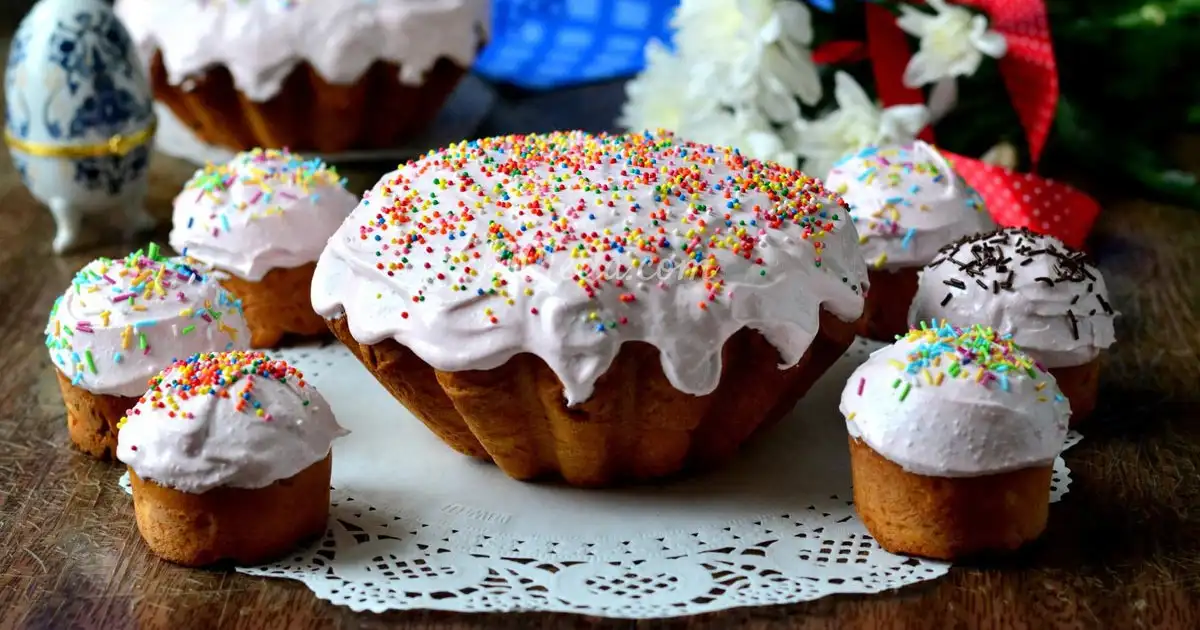
A few days before Easter, Vera and her father began making kulichs. Since her father was a miller, they had plenty of flour, and Vera loved animals very much, so they had both a cow and chickens in their yard. They had everything necessary to bake kulichs.
Although the village was small, they needed to bake quite a lot of kulichs. But for Vera, these were pleasant tasks. She set about the work with enthusiasm. After a couple of days, the kulichs were ready. Now it only remained to distribute them to everyone.
Vera took a small cart, placed the kulichs on it, and set off to visit her neighbours' homes. Vera knocked on the neighbours' door.
What is it?
The door opened slightly.
Hello, my name is Vera. I am your neighbour. I've brought you some kulich.
We have no money.
Please take it, I baked it myself.
Go away. Why don't you call Father Frost and offer him kulich too, what nonsense.
Someone grumbled from behind the door.
But it's completely free.
Vera said.
Why free?
Simply because I very much want everyone in our village to live in harmony, rather than hiding behind high fences. Please take the kulich. I baked it myself.
Very well.
And then the door opened fully and an elderly woman stood in the doorway. She took the kulich and thanked the girl.
This woman was called Maria Nikolaevna. She grew grapes and made raisins from them. Maria Nikolaevna's family owned a bicycle, which the villagers considered a luxury. Her husband occasionally rode this bicycle to town and sold raisins. With the money he earned, he bought various curiosities.
For Easter, they prepared kutya. Vera's gesture made an impression on Maria Nikolaevna. She suddenly realised that, despite living in the village for quite a long time, she hardly knew anyone. Maria Nikolaevna decided it was time for her to get to know her neighbours.
Meanwhile, Vera continued to distribute kulichs to homes. At first, everyone received her coldly, but once they learned that the kulichs were being given away completely free, their attitude changed immediately.
Vera told everyone that her birthday would be on Easter. And the villagers began to communicate with one another for the first time in a long while. With her noble gesture, Vera melted the ice in their hearts.
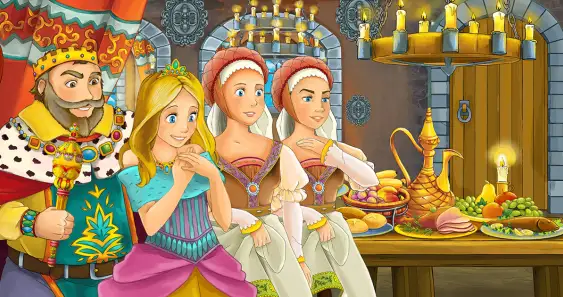
The neighbours decided to thank Vera for her kindness. Maria Nikolaevna's yard was quite large. Here they decided to hold a celebration for Vera. Each of the villagers brought to the table what they had in abundance.
The table turned out very well. And then Vera was invited to the table. She was pleasantly surprised. After this, all the villagers began to live in harmony, visiting one another more and more often.
Goodness done to people from a pure heart always returns as good deeds.