
In a certain kingdom, or rather, in a certain realm, there lived a king and queen. The kingdom was small, prosperous, well-kept, and flourishing, in a word. All problems had been solved by the current king's great-grandfather.
But there was one problem the great-grandfather couldn't solve, since it had appeared recently, after the current monarch's marriage. You've already guessed that the royal couple had no children.
The queen tried to resolve this delicate matter in her own way. Each evening she would take long walks, hoping to meet a kind sorceress who would give her some charming little trinket. She would place it under her pillow, and in nine months an heir to the throne would appear.
The queen walked slowly along the path of the old castle garden, lost in melancholy thoughts: late autumn had already arrived, soon she would have to stop her long walks because of the cold and snow, and the sorceress hadn't appeared to her this year either. The queen sat down on a bench, and then something fell on her head. It was a twig.
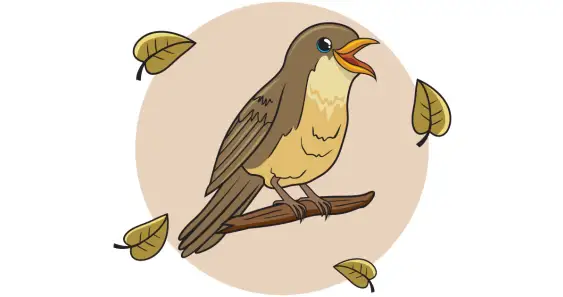
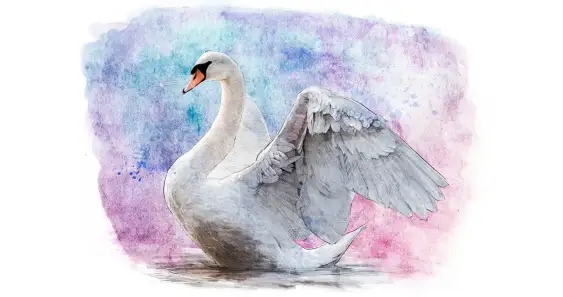
The queen was rather surprised, as there was no wind. She looked up and saw a large nest in which sat a bird that looked very much like an oversized duck. The queen gazed at this spectacle in astonishment. Not because of the size of the nest and duck, but because the bird was sitting in a nest in October.
Suddenly the duck stirred, and an egg fell right into the queen's hands. A large white egg, still warm. The duck suddenly took off vertically like an aeroplane from an aircraft carrier and, making a sort of whistling sound, disappeared behind a cloud. The nest swayed and fell at the queen's feet. The queen flinched, clutching the egg to herself, covering it with her palms.
With an expression of fright and bewilderment on her face and the egg in her hands, she appeared in the castle. The king was sitting by the fireplace reading the Royal Gazette.
Look what I've brought!
The queen addressed her husband. The king folded his newspaper and looked at his wife and the egg in her hands.
What's that? Where did you get an egg? Are you going to take it to the kitchen?
No. I don't know what to do with it, but I'm certainly not going to fry it.
And the queen told him about the little incident in the garden. The king pondered. He somehow immediately understood that this was all for a reason.
You know, I think this is no accident. There's some higher meaning here. An egg is the beginning of life. Perhaps this is the beginning of our child's life?
Said the king.
So what do we do now?
Well, let's try to incubate it.
You try.
The queen agreed.
What do you mean, me try? In the natural world, incubation is done by females. Everyone knows that from school.
But in the world of kings, they don't do it at all. At least, there's nothing about it in the school curriculum.
But the debate quickly fizzled out, because both the king and queen knew from school that eggs need to be kept warm constantly. But how exactly?
Perhaps we should order an incubator?
The king suggested.
No. Not only will our little one hatch from an egg, but he'll be incubator-raised as well? Order all the cushions in the castle to be brought to our bedchamber.
The queen disagreed.
An hour later, the queen was already sitting on a mountain of cushions in a spacious house dress, warming the egg with her body.
What should I do?
Asked the king, who also wished to participate in acquiring an heir.
You'll bring me food, replace me if I want to stretch my legs a bit or have a shower.
The incubation process began. The king and queen, taking turns, sat on the mountain of cushions. Everything would have been splendid if not for two worrying matters: doubts that this venture would end with the desired result, and the paparazzi.
Whilst each member of the royal couple battled their doubts independently and didn't voice them, dealing with the paparazzi was far more complicated. Fighting them was difficult: neither locks nor blinds helped. Like magpies, they perched on the sturdiest branches of trees growing near the palace windows, slipped through doors behind servants' backs, pretended to be postmen and couriers.
Much time passed. The exhausted queen had already resigned herself to the thought that this had been a foolish venture, and one night decided to tell her husband. But the king was asleep, she was still sitting on the cushions, felt ridiculous and silly, and wept quietly. Suddenly there was a soft crack, the queen moved aside and saw that the egg had split, and amongst the scattered shells the queen saw a tiny boy.
The news that an heir had appeared in the kingdom was printed in the Royal Gazette early in the morning. The paparazzi tumbled from the trees like ripe pears in unison, and the garden emptied. In the commotion, no one noticed that a large bird was sitting in a big tree on the central avenue. With its head tilted to one side, it observed everything that was happening.
The queen, who hadn't breathed fresh air for quite some time, decided to go out into the garden for at least half an hour, leaving her sleeping son in the care of the nannies and the king. The garden had already frozen over, frozen leaves crunched underfoot. The queen reached the bench where she had sat on that momentous evening.
She suddenly wanted to see the bird and thank it for the greatest joy in her life. For some reason she was certain that the bird would understand what she said to it.
The queen looked up, but didn't see the bird. "What a pity," thought the queen, "how sad when you can't say a few warm words to the one to whom you owe your happiness!" But the sadness was light, the fresh clean air filled her lungs, her heart beat a little faster. And ahead lay a new life, so long awaited.
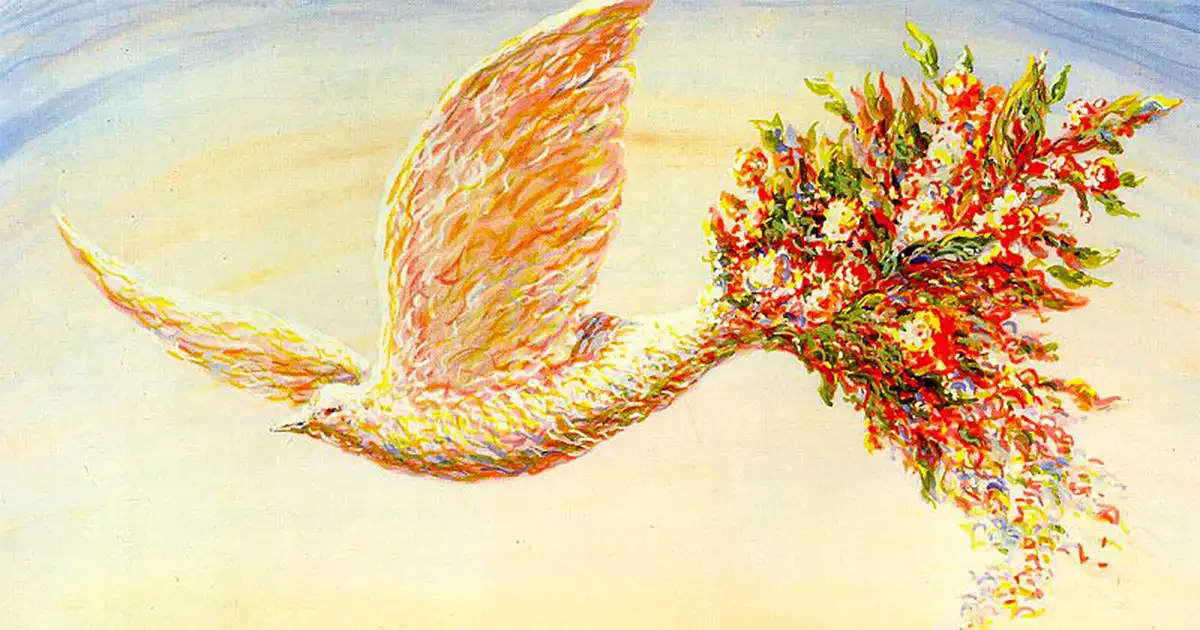
A familiar light whistle sounded, and from a tree deep in the avenue someone took off almost vertically, like an aeroplane from an aircraft carrier. But the queen, absorbed in her thoughts, didn't see it. And the bird rose higher and higher, and her heart was joyful. Almost beneath the very clouds she sang from the joy that overflowed within her.
She was a true bird of happiness and knew that this very happiness must be brought anonymously and freely, because only then does the giver receive such boundless freedom and the ability to sing with one's soul.