
On the eve before the weekend, the children in class could only talk about what the weather would be like on Sunday—whether it would warm up or stay cold. When Petya woke up in the morning, the first thing he did was go to the window and look at the outdoor thermometer; the temperature was -4 degrees Celsius. Frost! Hooray! The kids grabbed their skis, poles, and packed sandwiches and sweet hot tea in thermoses into their backpacks. Tatyana Ivanovna, Petya's dad Vova, got ready for the trip too; they also brought their skis along.
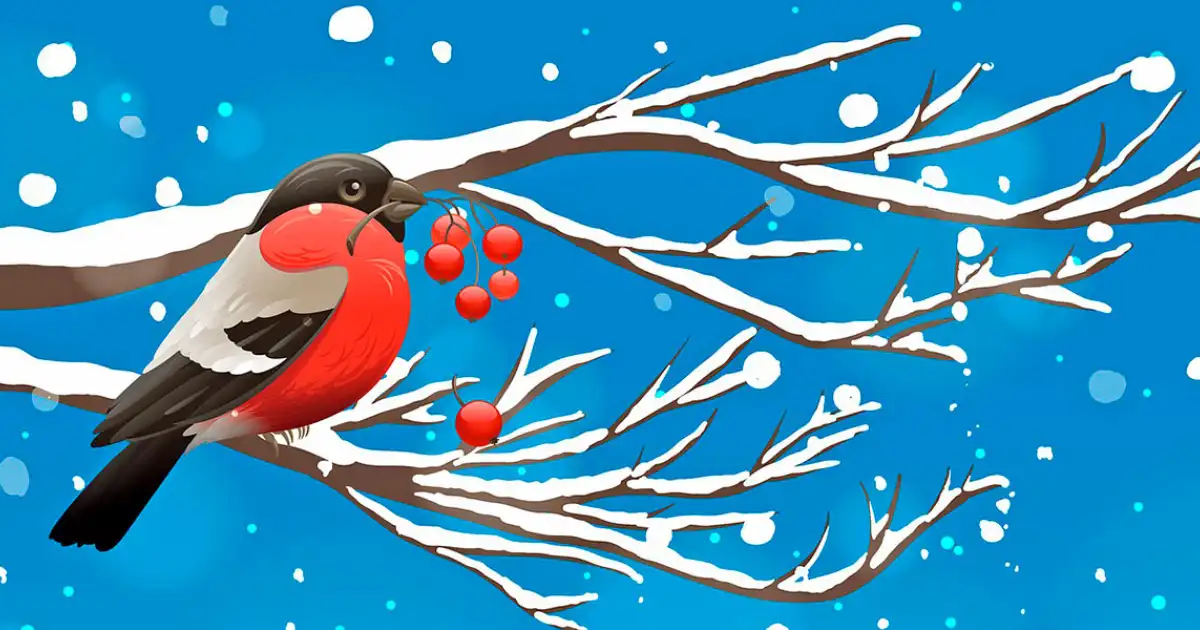
At nine o'clock in the morning, the commuter train brought the children to the forest. The kids put on their skis and headed along a well-worn path that someone had left as a ski trail before their arrival. In the winter forest, there was silence, with only the creaking of large snow-covered spruces audible and the occasional sound of bird calls.
That's probably a flock of sparrows
Katya suggested.
No, those are crossbills. Sparrows don't live in forests; they live in cities and villages, so you can't hear their chirping in the forest. And tits only live in the forest in summer; they fly to the city for winter. Crossbills and woodpeckers winter in the forest,
Tatyana Ivanovna explained.
The children stopped to rest a bit, and Tatyana Ivanovna began counting the kids. Vasya was missing, so Petya's dad quickly went back along the path and soon returned with an angry Vasily.
Can you imagine, Tatyana Ivanovna, what this enemy of nature did? He took off his skis and climbed a tree.
Petya's dad Vova reported.
Why did you climb up there? You could have fallen
Katya said, concerned.
I just wanted to get a nest for my collection. Besides, the nest is empty anyway; the chicks grew up and flew south
Vasya explained.
That's not quite right, Vasya
Tatyana Ivanovna objected.
Come spring, the birds will start building new nests and will use the material from old nests. So the nest you wanted to take will be very useful to the birds, and Katya was right—you could have fallen from the tree and gotten hurt.
Tatyana Ivanovna told the children that bird nests should not be touched; it's better to sketch them or take photographs. After all, nests can contain not only forest debris but also bird parasites, which can be dangerous to humans.
Together they continued on and set up camp near noon. The children gathered dry twigs. Petya's dad built a fire, melted snow in a pot so the kids could wash their hands before eating. When all the sandwiches had been eaten, Tatyana Ivanovna asked the children to collect the wrappers into one large bag and put it in the backpack.
Why not just burn the wrappers in the fire?
Anton asked, surprised.
There wouldn't even be a trace left.
The wrappers will burn, but the dangerous smoke from burning plastic will pollute the clean air in the forest
Petya's dad Vova explained.
It's better to throw the collected garbage in a waste bin, and we can leave the bread scraps in the forest.
The birds will eat them
Petya figured out.
Birds, squirrels, and mice—life in the forest continues even in winter. The animals are just afraid of people and try to hide.
The children decided to behave very carefully. After resting a bit more, everyone headed back to the commuter train because they needed to go home. Both the children and the adults were pleased with their walk through the winter forest.