All parents around the world have something in common. When night falls and the little ones climb into bed, mums and dads—no matter where on Earth they live—tell them fairy tales. Some make them up on the spot, while others read from books.
All magical stories begin with a fairy tale opening. An opening is a beginning, a source. It's what determines what kind of fairy tale it will be. Our opening goes like this:
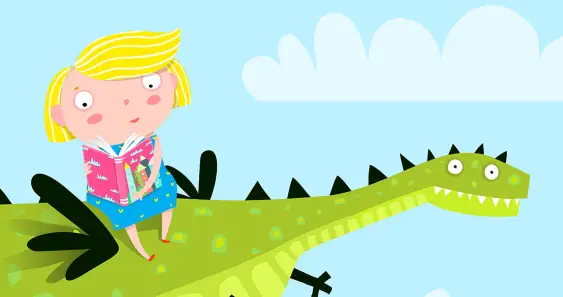
A girl named Tonya is very curious. She lives in a big city with her mum and dad. Every day Tonya tries to learn as much that's new and interesting as possible. How does a vacuum cleaner work? Why does a cat meow and a dog bark? Where do the clouds sail off to? So many questions fit inside her little curly head that mum and dad can't always keep up with answering!
Before bed, mum always tells Tonya something interesting. But the girl isn't in a hurry to fall asleep—she takes the opportunity to ask mum about everything under the sun.
Today I'll tell you a story, sweetheart, but not an ordinary one—a fairy tale. Once upon a time in a certain kingdom, in a certain land... No, that's not right! There once was a merchant who had three sons... That's not it either! How should I begin?
What kind of story are you going to tell me, mum?" asked Tonya.
A fairy tale. About a magical kingdom and fairy tale characters!" answered mum.
But what is a "fairy tale"?" the girl persisted.
Well, what do you think?
I reckon a fairy tale is a story about magical creatures and miracles!
You're almost right. To put it in grown-up terms, it's one of the genres of folklore or literature. An epic, mostly prose work with a magical, heroic, or everyday plot." You're right! A fairy tale is a work about fictional characters and events involving magical, fantastical forces. It can be a folk tale or a literary work, and its plot can be magical or everyday...
I didn't understand any of that—it's far too complicated." What? I didn't catch that...
I'll explain it all now. Remember when we read the fairy tale about the golden fish?
Yes, I really liked it. It's the one where an old man catches a fish and it grants wishes.
That's right. That fairy tale is by an author, so it's a literary work. It was created by Alexander Sergeyevich Pushkin—a famous Russian writer.
I remember that. But do all fairy tales have an author?
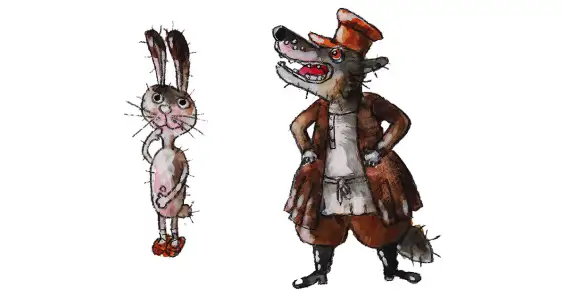
There are fairy tales that everyone knows, but they don't have an author. They're called folk tales or folklore. For example, "The Hare's Little House"—do you remember it?
Yes, it's the fairy tale about how a fox tricked a hare! Wait, mum... If a fairy tale doesn't have an author, how do you tell it to me? Does that make you the author?
You could say that. Folk tales pass from person to person, by word of mouth. They change a bit, but the plot stays the same. So it turns out that everyone who tells a folk tale is a bit of an author!
What makes a fairy tale different from any other story?
That's simple: in a fairy tale, the plot is always made-up, invented, imaginary, often magical. But if a story is about real events, then it's something like a legend, a tale, or a story.
Wow! Now I know everything about fairy tales!
Good, so will you go to sleep now?
Oh! No! I forgot to ask—where did the strange word "fairy tale" come from?
It's an ancient Russian word. It comes from the word "to tell" or "to show".
But that's not the same meaning at all!
Several centuries ago, fairy tales were the name for stories: news, various reports, and even census records! And the amazing magical stories back then were called fables.
So how did fairy tales become fairy tales?
I read that in the 17th and 18th centuries, various noble people made up incredible biographies for themselves. They invented things that never happened to them to look more impressive in society. It became fashionable, and such life stories also started being called fairy tales. And then anything made-up, unreal, and magical became a fairy tale.
Now I understand!
Right then, time for sleep. Goodnight, Tonya! May you dream the most interesting fairy tale.
Goodnight, mum!
Tonya slept very soundly, and she dreamed of a whole jumble of different fairy tales. A Grey Wolf came to her—teeth clicking—and said: "A fairy tale is a lie, but there's a hint of truth in it," and Tonya laughed back at him.
A big clumsy Bear came to the girl. He said he was a storyteller and that a fairy tale is like honey: "A fairy tale is sweet to listen to." Tonya didn't understand much, but she loved sweet honey and agreed with the bear. She was still too little to argue with a big clumsy bear.
And then everything spun and whirled and got all mixed up for Tonya: an old man caught a fox on a fishing line by the blue sea, and a golden fish stole the hare's little house.
Then Tonya's mum appeared in her dream and said: "A fairy tale is told quickly, but the deed is done slowly."
Tonya woke up—and the sun was already shining outside the window. She jumped out of bed and thought: "What a fairy tale I dreamed today! I'll go and tell mum and dad all about it. Now I'll be a storyteller too!"
Tonya's fairy tale is just beginning, but ours is coming to an end. Magical stories end with a closing. Our closing will be this: "Reality can't keep up with a fairy tale. We've told you various fairy tales, but reality isn't a fairy tale—you can't leave a word out of it."
Our closing will be this: real stories always have boundaries, but fairy tales don't. They're defined only by our imagination. Anyone can write their own fairy tale and become a magical author. You just need a bit of courage and imagination, and it'll all work out. Write fairy tales, friends—life is more interesting, friendlier, and merrier with them.