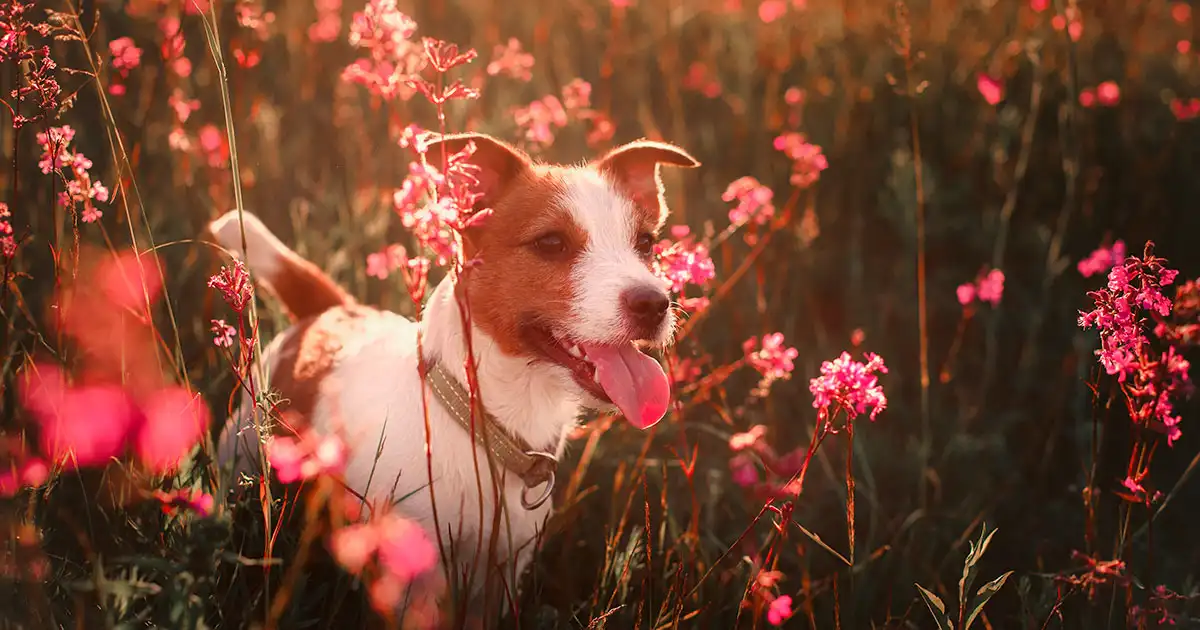

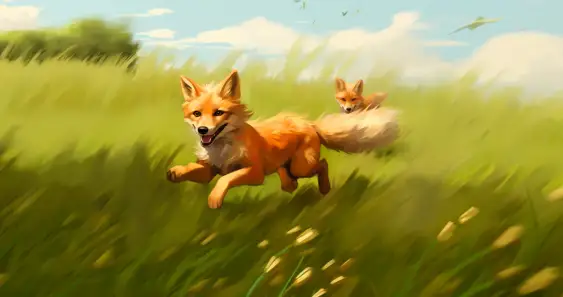
It all started the day I was born. Mum, our dog, licked my head and back clean and tucked me in beside her. The first smell I ever noticed was hers, and the first taste I knew was warm, sweet milk.
At about nine days old, as Mum later told me, I started to hear something, and two weeks after my birth I opened my right eye. The left one followed, though a couple of days later. At first I could barely tell light from shadow. Then, about four weeks in, I began to make out colours and the shapes of things.
That was when a new feeling woke up inside me, the thing people call curiosity. While I was still a puppy, something happened that changed my life and sparked my interest in science.
I lived with Professor Ian Pemberton. One day his daughter Lucy was blowing bubbles. She dipped a long, thin straw, as fine as a needle, into a small tub of soapy water and blew. The bubbles started out tiny, no bigger than my nose, then grew larger and more impressive, until it was no longer a bubble but a whopper!
Then Lucy flicked the straw like a magic wand, and the bubble drifted off on the breeze towards a huge gum tree as big as a house. The sun danced on its clear sides, and you could see straight through it. That was when I noticed something strange. It wasn’t one colour but many. There were seven. They shifted into one another across the transparent skin of the bubble, and it was so mesmerising that I froze for a moment. Then I tried to catch that beauty and bring it to show Mum.
I crouched, wagged my tail, and it was as if the ground itself gave me the strength to leap. I had never jumped so high as I did that day. I was ready to feel something I had never known before, ready to clamp my jaws shut and carry that unknown beauty to my dear mum. But all I got was the bitter taste of soap on my tongue and on my sensitive black nose, and the sound of a girl laughing.
I barked, which brought on another burst of bright children’s laughter. This happened several times, but the many-coloured beauty kept slipping away and never ended up in my paws. Or rather, in my mouth.
At my barking the professor himself came over. He stroked his beard, sat down on the steps, lifted his daughter onto his knee, and, laughing, began to explain:
I think Toby saw a rainbow. That’s what he was trying to catch.
Dad! What’s a rainbow?
The professor paused for only a second, then looked at me:
Listen! This might come in handy for you too.
Then he turned to his daughter. I came closer and sat down at his feet.
A rainbow is light being bent and reflected by tiny droplets of water, as small as poppy seeds, floating in the air. The thing is, a beam of white light is made up of different colours, the colours of the rainbow. They travel together, but when they hit a droplet, they spread apart, and you get seven little beams. It’s as if the droplet pulls them apart. And if there are lots of these beams, you get a big, beautiful rainbow. After a rain shower, for example.
I listened carefully, and at the end of the professor’s talk I gave a soft yip to show that I had understood and remembered. Then I ran around our huge backyard at the weekender, where the professor had brought his family for the summer. Of course, I came along too.
The yard was enormous, though maybe it only seemed that way because I was so small. And as I ran, I came across a monster. It was little, black, with long spikes and rows of white dots along its body. It was crawling along a stinging nettle leaf. Something unknown on a nettle is definitely best left alone!
I growled, and the creature stopped, tucked its tiny orange legs under itself and nearly curled up into a ball. I went quiet, and after a couple of minutes it slowly crawled on, moving its terribly small feet one at a time. I was scared, but I decided not to run away and to keep an eye on the creature.
The frightening beast wasn’t just moving around, it was eating the leaf. Greedily, intently, a lot. Still inching along like a tortoise, it eventually curled itself into something odd. A little parcel. A green lump hung from the stem and went still. I sniffed it. Lifeless, not moving. It just swayed slightly when I bumped it. I decided not to test this thing any further and ran off, completely forgetting about it within half an hour.
A few days later I happened, quite by chance, to go back to the same spot and saw that the cocoon (Mum told me what it was called) had darkened and grown softer. I went up and sniffed it, and found that the mysterious object had no smell at all. “The strangeness doesn’t get any less,” I thought, “I’d better keep my distance, since I don’t know what this thing is.”
The next morning the little parcel opened. I happened to be right there, on my fifth lap of the lawn, and watched a butterfly push its way out of the lump, like a leaf from a fragrant bud on a poplar tree. It was very beautiful!
Two bright strawberry-red wings, each with two thin black stripes and blue spots. Those spots seemed to follow you wherever you went. But that didn’t stop my questions. How did the butterfly get there? Why? From where? I had more questions than I could cope with!
Professor! I barked, looking up at him. He looked up from his papers and crouched down so he could see me better.
What’s the matter? Are you calling me somewhere?
Woof!
So yes. Right, come on then. Show me what surprised you so much.
When we arrived, he looked straight at the butterfly. It had almost crawled out of its cocoon and was getting ready to sneak off.
You brought me here to show me a painted lady coming out of its cocoon?
Woof!
Think you’ll be interested in hearing about butterflies?
Yip!
Right. First, butterflies like this one lay their eggs on plants, mostly on nettles or raspberry bushes. Then caterpillars hatch out of the eggs. They’re tiny, and they wriggle along like worms, but they come in all sorts of sizes, colours and shapes. The caterpillars crawl over the leaves and eat them. Then they find a quiet spot and curl up into a pupa. Lots of complicated changes happen inside the pupa, and eventually a beautiful butterfly climbs out. Like this one here. Sounds like a fairy tale, doesn’t it?
The professor held out his finger under the butterfly’s legs. She calmly stepped on and scurried across his palm, moving her thin little legs with their tiny hooks on the ends. Then the painted lady suddenly flapped her endlessly lovely but fragile wings and rose into the air.
I looked first at the butterfly, then at Professor Pemberton, as if to say, “Where’s she going?” The professor understood my question and went on, watching the beauty fly away.
Now she’s off to sip some flower nectar, so she can lay her eggs again. That’s the life cycle of a butterfly. It’s just how it works. Do you know why this caterpillar is spiky? It’s for protection from predators. A bird or an insect-eating animal mustn’t eat it, so it defends itself as best it can. Some insects change to a bright, noticeable colour to say, ‘Don’t touch me, you’ll be sorry!’ And others do the opposite and blend in with their surroundings to be harder to spot. The painted lady is a very bright and beautiful butterfly. But what we admire actually works as protection against enemies.
Then the first drop landed on my nose. Then a second, a third, a fifth, a thirty-sixth, and after that I lost count… So I quickly ran under the verandah, and then inside the house. The rain drummed on the roof, and it felt good. I calmed down and fell asleep snuggled against Mum’s warm side.
When the rain stopped and I bounded out of the house, I rolled across the wet grass. It was terrific fun, and I didn’t notice I’d skidded all the way to an old wooden bench that stood in our yard. I bumped into it with my back and my curiosity ran straight into something inexplicable. The thing is, the strong metal nails that held the bench legs to the seat had gone rusty! And once again the questions came: “How?”, “Why?”, “What from?”
I growled and stamped my paw. Confusion and bewilderment boiled up inside me, going way beyond anything sensible. First the nails went rusty, then what? The bench? The grass? The whole yard?
Professor Pemberton’s two sons, Mike and Tom, saw me and came over to see what had frightened and unsettled the little puppy. But when they got close, Mike burst out laughing, while Tom started carefully examining the bench.
I reckon he only just noticed the bench! laughed Mike, flopping onto the cold wet grass and clutching his stomach.
No, Tom said firmly, it’s something else. But what? Rotten old boards? Are they so rotten they might crack if you sit on them?
Grr!
So, no. What about the nails then? Is something wrong with the nails?
Woof!
Oh, that. Just old rusty nails. Time to replace them, you’re right. Well overdue.
Rrrr!
Not about that? Ah! Got it. You saw those nails looking normal, right? Right. So you want to know why they changed?
Woof!
And will you understand? Tom crouched down.
Just explain it so he gets it, Mike chuckled, heading inside to change, since his clothes looked a bit of a mess after his fall.
Tom sat on the very same bench and sat me in front of him. He waited until I got comfortable, curling my tail into a bagel shape. I wasn’t very big back then. Then he began to explain.
If you leave any iron object in a damp place, it will gradually start to… Hang on, no, that’s not right. A metal object can corrode. Iron basically burns, combining with oxygen dissolved in the water. Yes, Toby, there’s oxygen in water, the same kind we breathe. No, I’m getting this wrong again. Have you ever seen a campfire? Sparks fly off it and you’re left with charcoal. Rust forms on a nail or a bucket in much the same way. And it stays on the iron after the droplet disappears, evaporates. Got it? Water and air can turn an iron thing into a rusty iron thing. It’s orange, like the neighbour’s setter. So did you understand?
Woof!
Good stuff, Tom laughed, off you go, run along and play.
Those three incidents were certainly not the only unusual things that happened to me in my life. But they are what instilled in me a love of science. After that I started watching Professor Pemberton while he worked. Sometimes he explained a few different things to me too, like what a prism is, why leaves turn yellow, or what a catfish’s whiskers are for. From all of this I took away one very important idea: science isn’t boring or difficult, but on the contrary, it’s fun and interesting!
P.S. Maybe you don’t quite believe that a real professor would answer questions from a little puppy? Oh! This was a professor who had several dogs of different breeds in his lab. He called them nothing other than “my research team”. Thanks to the dogs, he made quite a few discoveries himself.
My scientist’s name was Professor Ian Pemberton.