
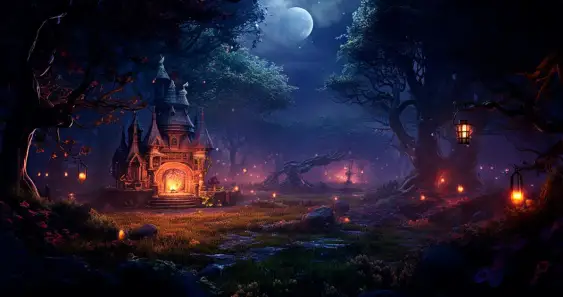
Once upon a time… well, no. Nobody lived in the forest by the river at first. Long ago, or perhaps not so long ago, only rough grass, moss, pines and firs grew there. No squirrels scampered along the emerald branches that tangled together near the sky into vast, intricate nests and webs, no lynxes prowled the thickets, graceful, beautiful and fearsome, nor did the great broad-antlered elk roam there. No birds whistled to one another before dawn, announcing the arrival of a new day with their calls.
It was quiet and empty in the forest. The river flowed silently, carrying only in autumn the fallen leaves of the sorrowful willows that hung over the water, waiting for spring.
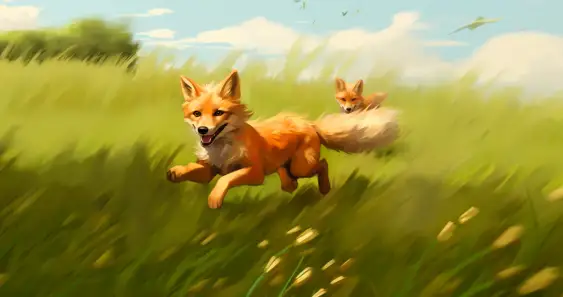
In winter, however, firmly locked in ice and gently dusted with a second snow, or perhaps a seventh, the nameless, lonely little river bore no tracks at all. There was no beautiful fox flickering like a spark between the branches, no tiny hare hiding from the merciless forest robber. Only fish swam in the murky depths, staring dully at the greenish, half-transparent weeds.
Then one day there came the sound of people’s voices, the clip-clop of hooves on frozen ground, the thud of an axe striking a pine trunk and the gurgle of ice broken by an ice pick and sinking beneath the water. People had arrived in those parts. There were not many of them, perhaps ten or twelve. They wore warm sheepskin coats made from animals this forest had never known, and they began building little houses along the riverbank. On the very first day they felled ten pines, and the stumps stood out sharply against the forest rising behind them.
After the people came, the forest filled with life, which the settlers had brought with them. Little voles scurried about, hares appeared, tits, bullfinches and capercaillies began to fly, owls with tufted ears hooted at night, and somewhere, now and then, a disturbed bear growled.
For a long time the people lived on those lands, and the settlement grew. From tiny earth huts so cramped you could hardly turn around in them, the villagers progressed to two-storey houses built from spruce and pine. The scent of resin made your head spin and carried you back to a time when nobody had yet set foot in this paradise. Stoves smoked as they baked tasty bread made from rye grown in the fertile soil, cooked cabbage soup with vegetables stored from autumn, and fried fish, served with a sweet berry squash.
Then one day a strange man arrived in the village carrying a small suitcase. Though ‘arrived’ is perhaps too strong a word. If you walked thousands of kilometres you might get there, but only with great difficulty and after a very long time. First the man travelled by train and, listening to the rhythmic clatter of the wheels, he thought about his important mission. Then he boarded a ferry and fell asleep. By morning he had to make his way in some ancient, rattling old van to this very little village.
On reaching the place, he took a notebook and a pen from his suitcase. He went up to each of the thirty houses in the village, knocked on the door and asked the same question:
Good morning. I’ve come up from the city on business in this village. Could you tell me, please, how many people live in this house? What do you heat your home with?
Everyone answered. Some did so reluctantly and in a word or two, while others began telling a long story, but the man politely yet firmly interrupted them and asked them to answer the specific question. Having questioned everyone, he left at once.
This is a catastrophe! Why do so few people have gas in their homes? ― said the meeting about gasification.
Probably they’re used to heating with wood. They’d have to retrain, learn how to use it, all that sort of thing… It’s long and tedious, and besides, nearly all of them are pensioners. Why would they want that?
But wood is simply not an option. We have to run the gas through. We can’t just leave them like this, people need heating! They have to live, after all!
We’ve tried before, ― said the very same man who had visited the village, rising from his seat. He dropped a folder on the chief’s desk and said, ‘Everyone who was responsible for it vanished in mysterious circumstances in the forests. They say some sort of evil spirit is at work there. I’m not one to believe in unclean forces, but the facts speak for themselves. We need to think about this, I understand. But look! They disappeared around the time the pipes were being laid. The search has been going on for two weeks, if not longer, and they still can’t find them.
The man sat down, and the managing director fell into thought. He scratched his head and finally said pensively, as if his mind were far away from the room:
Well… We’ll think about it. The meeting is over, ― he took the folder from the table and slipped out of the office, shuffling his feet slightly. Everyone else followed him out.
A week later a small team of workmen came to the village from the city. They quickly dug up the earth with their spades, as if taking a closer look, and then drove off again. Though Tom or Harry, one of the villagers, saw and heard that the workmen, besides taking soil samples, were also calculating something and talking about some pipes.
Oh, good Lord, whatever is going on? Things will only get worse, ― sighed the old women and men, but they went back to their usual business: chopping wood, fishing, hunting and knitting mittens and socks.
The children ran to the spot a hundred times a day, where the workmen had diligently but clumsily buried some sort of metal contraption. Everyone wondered what they were going to do with it, but just in case, nobody touched it. You never know what it might be, and it’s safer that way. It might be something important.
And indeed, a few days later even more people appeared, and the man with the suitcase came back again. His eyes blazed with some idea, but the villagers couldn’t work out what it was. He went round for a second time and asked the same question:
Tell me, what do you heat your home with?
Wood, ― everyone answered, no matter who he asked.
Understood, I’m writing it down, ― said the man, and sure enough, a name and address appeared in his notebook.
What does he want? ― the villagers wondered as they shut the door behind him.
He walked on, humming to himself, quite pleased. His work here was done, and all that remained was to pass the results on to the workmen, who in turn were busy with their own task of laying pipes. There were many, many long pipes and little tubes, like vessels, stretching across the whole settlement. Finally, the pipes were run under the houses.
And then the people seemed to lose their minds: they began removing their stoves from their homes. That was too much for folk to bear, and they went to demand an explanation from the fellow with the notebook. He explained all about gasification, saying, more or less, that gas was being brought into the houses, which would make cooking and heating easier. Everyone eyed him suspiciously, but they left. They would sort out later what he was up to, carrying on like this.
The man got ready to head home. He lodged with an old fellow and paid him by chopping firewood. Then a wind suddenly rose, so strong that it nearly knocked the man three metres off his feet. He heard someone striding through the trees, so heavily that branches cracked and birds fell from their perches. The man grew frightened, but he kept walking. And then, look! Eyes flashed between the trees!
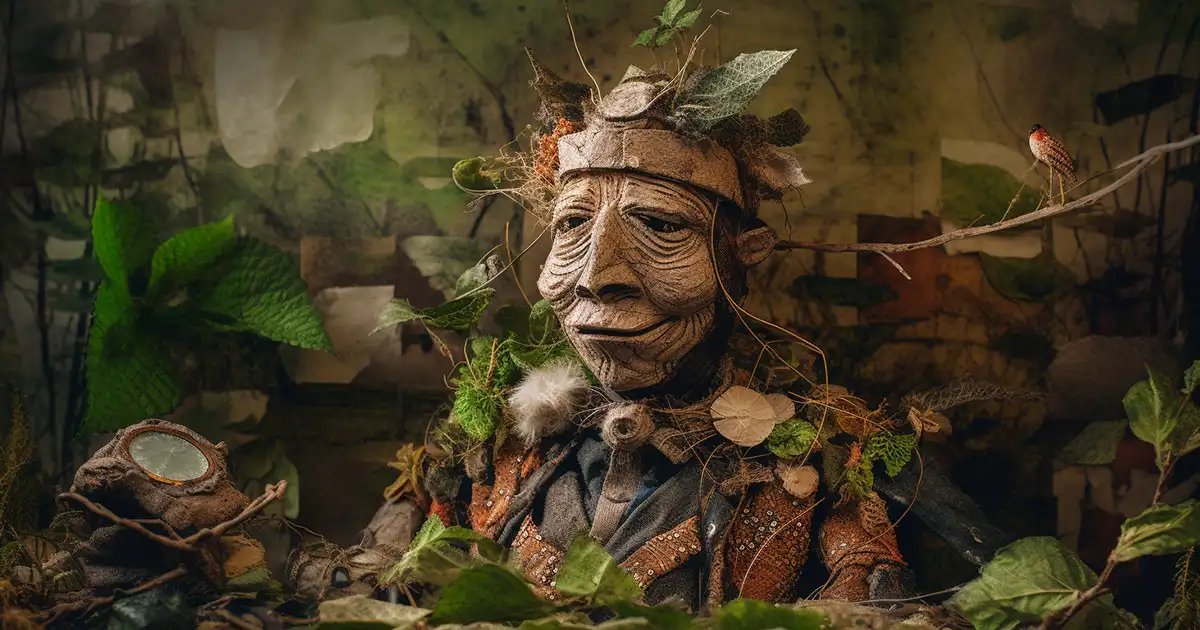
At last the thunderer emerged. A huge figure, two metres tall, with arms like tree trunks, glowing eyes, a mouth that could swallow you whole without noticing, covered in moss and needles, overgrown with twigs so that you couldn’t see his face.
What?! Dare to frighten the villagers with gas! ― thundered the stranger. ― You’d better get out of here with your gang!
W-who are you? ― the man asked, stammering and frightened.
Who, indeed… Old Mister Nobody! I’m the Leshy.
So it’s you who’s making people disappear? ― the man said, more firmly now.
Yes! Don’t you dare encroach on my territory! This is my land and my forest! And who’s going to cut firewood in the forest once your gas is in? Nobody! So go back to your poky little town! Otherwise you’ll go into the forest with me, and one leg will be left under a bush, an arm under a fir tree, and a wolf will drag off that silly head of yours! ― the Leshy growled, then burst out laughing, and all the needles fell from the nearest pine.
The man backed away. He looked like an ant beside the huge and terrifying Leshy, who was already preparing to scoop him up with his long, gangling arms and drag him off into the dark, deep taiga.
The Leshy fell silent and stamped his log-like foot on the ground. At once all sorts of undergrowth burst out of the earth and began to wind around the man’s legs. The grasses climbed higher and higher, until his waist was no longer visible…
Leshy! Stop this at once! ― came a shrill voice from behind, and the air filled with the smell of pond scum and rotten fish.
Kikimora! Blast you, you old witch… What do you want? He’s after our forest! You just can’t let that go on, really! Let him vanish into the very land he came to take!
Well, that may be so, but listen to me… and stop strangling him, for goodness’ sake! He’s innocent. He hasn’t built anything. He just sits in that shed of his, wearing out his trousers and drinking tea.
The grass sank back into the earth, and the Leshy turned to the bog-hag. Only then did the man get a proper look at her. Dark, unwashed hair, which had possibly been that way for centuries, was tied with a filthy brownish-maroon ribbon and grew in tufts. Her greenish dress hung in rags, and through the holes showed dark, rough skin.
A hooked finger pointed straight at the poor guest of this ill-fated village. Her hunched back made the bog-dweller look like a shrimp, and her grey, watery eyes watched both of them closely: the man and the master of the forest.
He is innocent, ― the Kikimora said once more. The Leshy rolled his eyes and, yawning, asked:
What do you want? Why have you come?
Stop dragging people off. And let this one go. They do good work.
Good work?! ― the Leshy flared up again. ― Where’s the good in that?! Has anyone ever heard of such a thing?! Just like that, for nothing at all…
Will you listen to me at last, you old stump! ― the Kikimora lost her temper, and the Leshy stepped back a little, tore a young fir from the ground by its roots and hurled it at her. The bog-dweller dodged such a treacherous and sudden attack but carried on speaking:
Just wait, you’re not a hundred years old, nor two hundred! Your heart might give out, and what will you do then? I’ve no frogs left, you’ve eaten them all, you wretched lump! Just let me get my hands on you, I’ll… ― and the Kikimora shook her fist at the Leshy. He fell silent and sighed.
Go on, ― he summoned a stump from the earth and sat down on it, like Rodin’s Thinker.
They bring good. It will make life easier for people, cooking and keeping warm on cold nights. As for you and your loneliness…
We’ll put you on the Fairy Tale Trail of Britain! ― the man suddenly exclaimed, then burst out laughing like a madman.
Oh, a lunatic! ― the Leshy replied.
We shouldn’t have frightened him, you cursed fool!
Steady on! Speak, but don’t talk nonsense.
And the man went on:
Anyway. We have a scheme where people travel around the country and share folk tales and all sorts of good things. Lots and lots of people would learn about you. And they’d bring you little gifts, wouldn’t they? That would be splendid, wouldn’t it?
Splendid… ― the Leshy drawled. ― I do get lonely, with just the beasts and the birds for company. I’d like some company. Com-pa-ny! But with unclean spirits there’s no company at all, only constant fighting. One minute the devils in the pool are in a rage and you can barely calm them down, the next some wretched spectre comes flying in, and you have to chase after it like a dimwit with a torch, and then… oh… horror! When Maara comes back from the endless steppes, there’s no hope! All the river, forest and bog spirits gather together to drive her away!
Listen, ― the man suddenly said, ― why don’t we write them all down! Think of the stories we’d collect!
And what about the gas?
We’ll run it through, of course we will! People will fry their fish, bake scones and crumpets and bread, play the fiddle and the pipes and tell stories to their children.
Oh, how lovely! ― giggled the Kikimora. ― Honestly, I can barely breathe in the bog with all this gas about.
Wait, Mrs Kikimora. You have gas in the bog too?
Of course we do, why do you ask?
It’s a long way from the town to lay pipes. But look, you’re right on the doorstep, just a stone’s throw away!
Ah-ha, ― the creatures replied in unison.
They let the man go, and he set off home to write the tale down and file his report with his superiors.
When he came back again, the villagers welcomed him like one of their own, and he stayed on to live there, with a new gas cooker and a radiator. He travelled to the city many times, telling us those tales, and now I have passed them on to you.
As the saying goes, that’s the end of the story. Whoever has listened, let them go and meet that Leshy for themselves. He has a great deal of interesting things to tell about this kind land, rich in legends and tales.