


Vitalina's mother had dreamed since childhood of learning to play the piano. However, when she herself was a child, her family struggled financially: the money her father and mother earned barely covered life's necessities, so her parents could not afford such an unthinkable expense—buying their daughter a piano, which cost an enormous amount of money.
And so, in her childhood, Vitalina's future mother solemnly promised herself that when she grew up, she would definitely buy herself a piano and learn to play it.
And now that long-awaited moment had arrived: in the flat where she lived with her husband and daughter, a digital piano arrived in special cardboard packaging from the "Music" shop.
Vitalina's father unpacked the box, carefully removed the small, elegant musical instrument from it and placed it on the coffee table. The piano gleamed and sparkled, attracting and delighting everyone's eyes. Vitalina could not resist: she ran to the coffee table and had only just tried to touch the piano keys with her little fingers when her mother sharply cried out:
Don't you dare! You mustn't!
And they stood for a long time near the wonderful musical instrument, silently admiring it. Finally, Vitalina's father said:
Well, that's enough! We've looked and that's sufficient.
After which he took the piano in his hands and put it back in the box, and carried the box with the piano inside to the wardrobe. He closed the wardrobe door with a key and handed the key to his wife, Vitalina's mother.
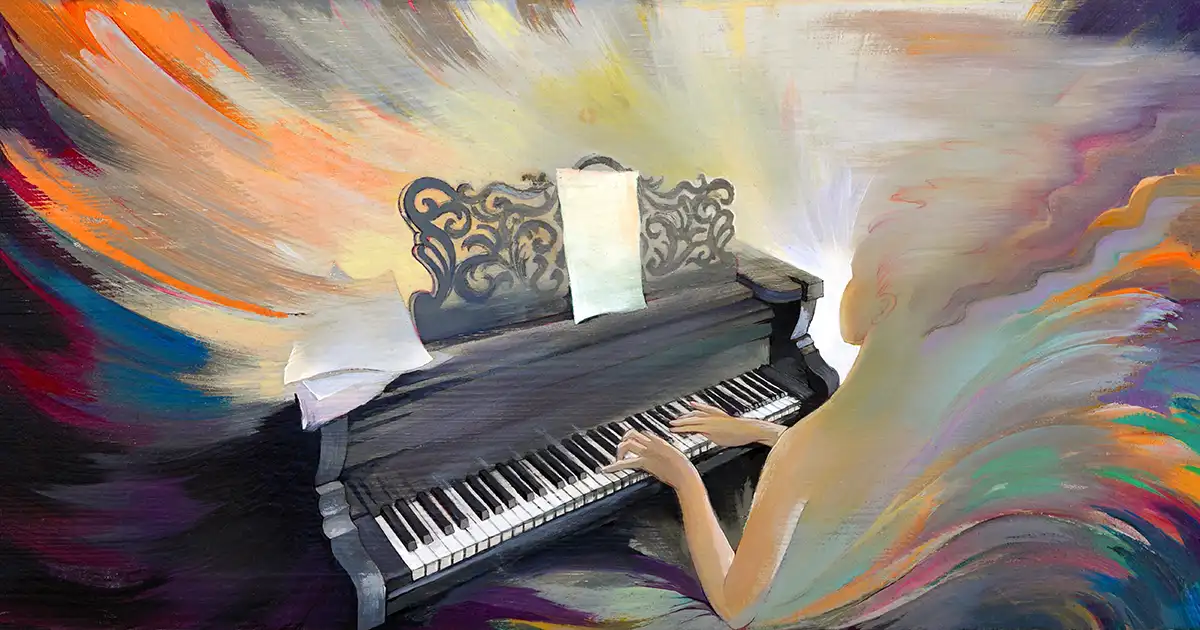
Days passed. Vitalina's mother practised playing the piano for an hour every day. She learned simple piano pieces from sheet music, which her close friend who lived in another city—a music teacher and pianist—sent to her by email.
When several months ago Vitalina's mother shared with her pianist friend her cherished plans to buy a digital piano in the near future and try to learn to play it herself, and perhaps later teach her daughter, who had just turned three, her pianist friend, along with promising to help her with sheet music, said:
I strongly advise you, dear friend, not to let your daughter near the musical instrument, not to allow her even to touch it until your daughter is at least five years old. Don't you and your husband want to see your daughter talented?!
Vitalina's mother did not understand the meaning of this strange recommendation, but did not ask her questions to clarify what she meant. She warmly said goodbye to her friend and ended the call. But afterwards she constantly pondered her friend's words, trying to unravel their hidden meaning.
Vitalina, each time she was present at her mother's music lessons, listened with pleasure to these beautiful melodies of songs and dances that her mother performed with her skilful fingers.
Vitalina herself did not dare even approach the wonderful musical instrument: her mother had strictly forbidden her to do so. Her mother explained to her daughter:
Vitalina, you are still very small, you do not yet have the necessary skills and ability to press the piano keys correctly and properly. If you suddenly start banging your fingers randomly on the piano keys, it might feel hurt and even become "ill" for a long time. And then my lessons on it will stop, and music will no longer sound in this room. You don't want that, do you?!
And Vitalina was forced to reluctantly agree with her mother. She remained her mother's only and most devoted listener. And this greatly inspired her mother, and she tried to perform piano pieces as well as possible and without mistakes, so that her performance would each time cause her daughter genuine admiration and delight.
As for Vitalina's father, he viewed his wife's new hobby sceptically and coolly. He considered it her ordinary whim, a feminine caprice, and treated her piano "exercises" with patient indulgence. Especially since he spent most of his daytime at work.
In the evening he returned home tired. Vitalina, who always waited impatiently for his arrival, each time joyfully and enthusiastically threw herself at his neck, but her father, picking her up in his arms and tenderly kissing his daughter, immediately set her down on the floor and went to his room to rest.
Her mother, during her music lessons, still found time to talk with Vitalina about how to train and develop her fingers so that when pressing the piano keys, the sounds would be beautiful and full-toned. She said:
You must teach your fingers to touch the keys lightly and crisply with their pads, as if they are running, frolicking, dancing. All ten fingers—five on the right hand and five on the left—must be equally nimble, obedient and strong, then a pianist can manage them skilfully and be proud of them.
Yes, Mummy, you're right not to let me near the piano. After all, it's very difficult to manage all ten fingers, which must press the keys in turn and in different sequences. I'll never learn to do this!" Vitalina said bitterly.
Now, don't despair! As you grow up, you'll manage it. For example, centipedes, which look like caterpillars, don't actually have forty legs but many more, and they manage all their legs easily. You are cleverer and more capable than these centipedes, aren't you?!
Vitalina, having heard her mother's words, walked away thoughtfully from the piano, approached her little chair standing by the wall, and sat on it.
When her mother went to the shop for shopping and left Vitalina alone at home for a while, with the musical instrument locked in the wardrobe, she would approach the wardrobe and talk to the piano through the door:
Dear wonderful piano, thank you for the beautiful music you give us. I love you very, very much and will always love you.
Several months passed. Recently, Vitalina's mother no longer hid the digital piano in the wardrobe, and it remained lying switched off on the coffee table.
One day, when her mother was not at home, Vitalina could not resist temptation: she approached the musical instrument to at least touch it with her hand and gently stroke it. She moved her mother's chair, which was too high for her to climb onto and sit, and stood before the piano, gazing at it with admiration and love.
The piano unexpectedly switched itself on for Vitalina. Suddenly a key lit up, and the number "1" shone brightly on it. Vitalina, without hesitation, immediately pressed this key with her large first thumb of her right hand; the key sang a pleasant sound, and its light went out.
Then the neighbouring key to the right of the first, marked with the number "2", lit up, which Vitalina immediately pressed with the index second finger of her right hand; the key sang this time a slightly more tender sound than the first key. In a moment the light went out in this key too.
Keys marked "3", "4", "5" successively lit up, sang and went out. Vitalina pressed them with the corresponding fingers of her right hand. Vitalina did this exercise for the five fingers of her right hand with the "magical" piano four more times, after which it switched itself off. Vitalina spoke with passionate feeling:
Thank you, Magical Piano, for the music lesson you gave me! I will be your most diligent pupil. You won't be disappointed in me!
And after these words she ran to her room, sat on her little chair standing by a low writing desk, placed her right hand on the desk and began to tap out with her fingers her musical "homework" received from her Teacher—the Magical Piano.
Two weeks later, under the guidance and with the help of the Magical Piano and thanks to perfectly completed "homework", Vitalina had already learned to perform beautifully on the musical instrument a good dozen simple pieces: songs, dances, little studies.
One day, when Vitalina's mother went to the shop for shopping, and Vitalina herself, taking advantage of her absence, was learning new pieces on the piano assigned to her by her Teacher—the Magical Piano, her father unexpectedly came home. He heard beautiful music coming from the next room, went in there and was stunned with amazement: his little daughter was skilfully playing on the piano with her small childish fingers wonderfully pleasant musical pieces.
With tears in his eyes, he rushed to his daughter, picked her up in his arms, embraced her, tenderly kissed her and spoke in an emotional voice:
My dear, how talented you are! How did you manage to master the art of playing such a complex musical instrument as the piano all by yourself?! How proud and delighted I am of you! I'm sorry that I paid you so little attention. From now on I will treat you differently, I promise!
Vitalina quickly and fearfully blurted out:
Dear Daddy, only please don't tell Mummy that I played the piano without her permission—she will scold me severely for this and be very displeased with my wrongdoing.
All right," her father replied, "I won't give you away. But here's what I suggest: soon is Mummy's and your beloved Grandmother's holiday—International Women's Day on 8 March; let's arrange a concert for them on this festive day—it will be an unexpected precious gift for them, a real surprise! Do you agree?
Yes," Vitalina answered enthusiastically.
8 March arrived. From early morning, Vitalina asked her mother to dress her as beautifully as possible, like a princess.
After all, it's my holiday too," Vitalina explained and added, "and I'll congratulate you and Grandmother in the evening when all the guests gather at our festive table.
In the evening, when all the invited guests had arrived, her mother was still busy in the kitchen, preparing festive treats for the guests.
The guests were bored, and Vitalina's father announced:
Dear friends, in honour of today's holiday, my daughter has prepared a little festive concert for all of us, which she will now perform for you.
He went to the digital piano, switched it on, moved a low stool up to the piano, called Vitalina over and seated her on it.
Vitalina began to play. She performed with both hands together, like a real professional pianist, one piece, then another and then all the other ten to twelve musical pieces. Loud applause, ovations, cries of "bravo", "encore" sounded after each beautifully played piece. Standing in the kitchen doorway, Vitalina's mother watched the unthinkable miracle happening before her eyes in a state of semi-shock.
She realised that, of course, Vitalina had broken her ban on touching the piano, but at this moment she was overjoyed about it. Now she understood the meaning of her pianist friend's words, who had asked them not to rush into teaching their daughter to play the piano, because everything forbidden, which causes a child's constantly growing interest, gradually becomes more and more coveted for them.
This is how true great talent awakens in a child.